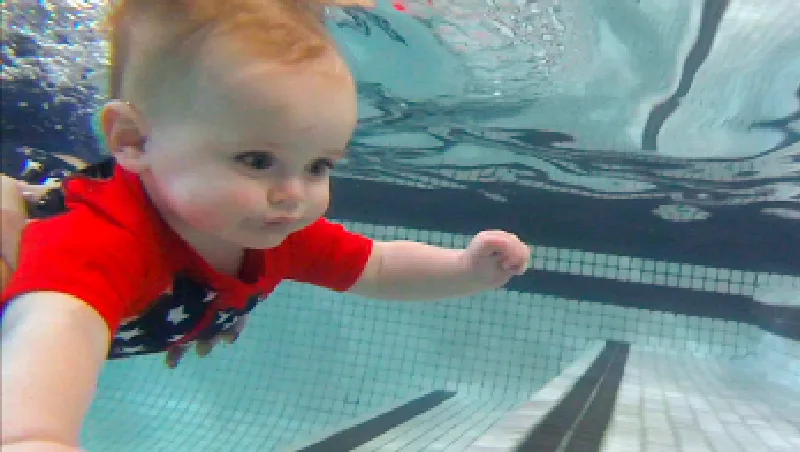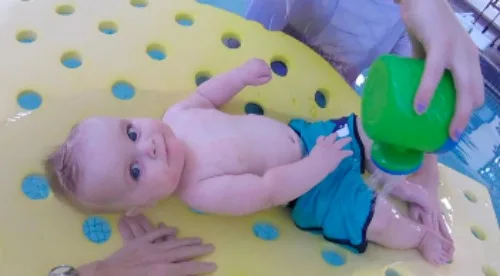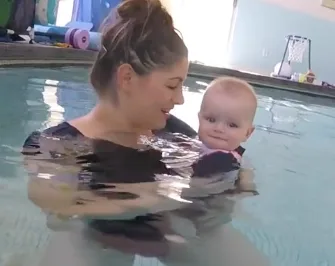
To begin the journey to help your child overcome his fear of water, he needs to start with being able to put his face in the water. And he's not going to want to try to put his face in the water if he's not comfortable with having water poured down his face. (Also, if he can't even dip a toe in the water yet, start here.)
You're going to want him to be as comfortable and relaxed as possible. The following steps work well for children that are at least four years old. If you don't have access to a pool, a bathtub works just as well.
November 2018 update: I originally wrote this blog post in 2016, and while it still holds up for children 4 years old and up, I have since discovered another fantastic approach in my continued research into fixing water anxiety. Not only is this technique extremely effective for this age group, but it's also just as persuasive and motivational for the 2-year-old+ child. Click here to see how easy it is to get your kiddo to put his face in the water — even without goggles and a nose clip.
This post contains affiliate links. If you click an affiliate link and purchase the item, I may receive a small commission at no extra cost to you.
Before you lure your child into the water, you'll want to be equipped with the following:
- Warm water — an ideal temperature is somewhere between ninety and ninety-five degrees Fahrenheit.
- Patience — after a few unsuccessful attempts you may get frustrated and be tempted to shove your child's face in the water. Fight the urge, or it will only prolong the process. Think to yourself, "what would ________ do?" Then fill in the blank with Mother Teresa, Gandhi, or the Pope. That's the level of patience I'm talking about.
- Objects that sink — rings, torpedoes, and treasure are all great motivators.
- Goggles and a nose clip
- Patience — did I mention this already?
- Other pool or bath toys that float — these sea creatures, pond bath toys, and ducks have no holes for water to get in, and they're all BPA-, phthalate-, and PVC-free.
- Patience — it needs repeating.
Follow your child's lead. Don't force him to do anything he doesn't want to do. Let him decide when he's had enough.
Add some variety to the session. Include activities that allow your child's head to remain above the water. For example, you could have him practice kicking while sitting on the steps. If he's comfortable enough to leave the steps, you can help him practice kicking while holding a noodle and picking up floating objects like rubber duckies at the same time.
Each session should be no more than 30 minutes, with about 20% of the time devoted to practicing putting his face in the water.
Want a head start? Get my free course — How to Prepare Your Baby for Swim Lessons (0–8 months).
Time to tackle that fear of water
Don't move on to the next step until your child is completely comfortable and relaxed with the current challenge. (This doesn't apply to steps one or two.)
1. Take a deep breath
Before entering the pool, have your child take a deep breath in, then let it out. Demonstrate this if you need to.
As an instructor, I've had students who just won't do this for me. It's okay if they don't — just move on to step two.
2. Take a deep breath and hold it
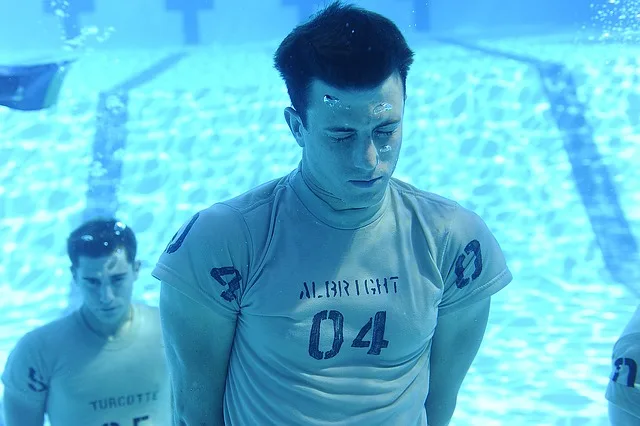
Have him take another deep breath and hold it for a couple of seconds, then let it out. Again, demonstrate this with your cheeks full of air. Say, "Look at my balloon face. Now you show me your balloon face." If he won't do it, it's okay to move on to the next step.
From step three and beyond, each step needs to be mastered before continuing.
3. Putting the mouth in the water
Have your child sit on the steps. (But if he can't even sit on the steps with his feet in the water, then start here.) Now, instruct him to take a breath, hold it with his balloon face, keep his mouth closed, and put it in the water. Demonstrate first — keep your mouth in the water for 2 or 3 seconds.
Now it's his turn. Encourage him to try and to do it to a count of 2 or 3. Explain that when your mouth is closed tight, no water can get in. He may do it without hesitation — if so, move on to step 4.
If he doesn't want to, ask if he can get his chin wet. He might scoop up the water in his hand and bring it to his chin, or just dip his chin in.
Now play a little game with the objects that sink. Create your own game or try these. Don't overdo it — somewhere between three and ten attempts at most, depending on the child.
4. Putting the mouth and nose in the water
When children first learn to put their nose in the water, they don't always do a great job of keeping water out. Show your child how you can hold your nose closed with your thumb and index finger.
Take a breath and hold it, then put your mouth and nose in the water for 2 or 3 seconds. Encourage your child to do the same, even if it's just for a split second.
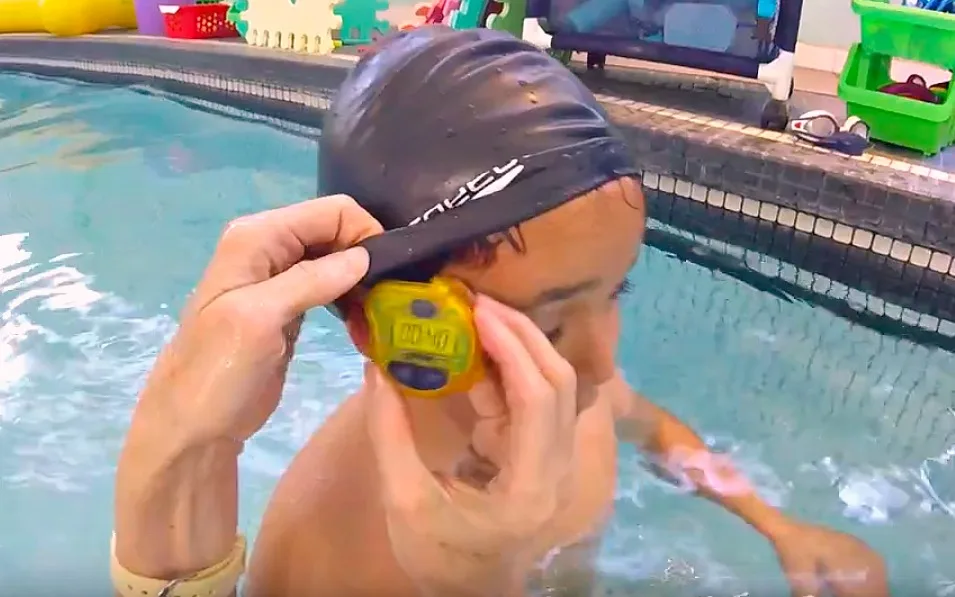
Your child may not want to hold his nose closed — this is where you introduce the nose clip. If he resists, put the nose clip on yourself and show how well it keeps the water out. If he still resists, it's time to motivate him with these games.
5. Putting the whole face in the water
You made it through the most challenging parts — the mouth and the nose. Time to put the whole face in.
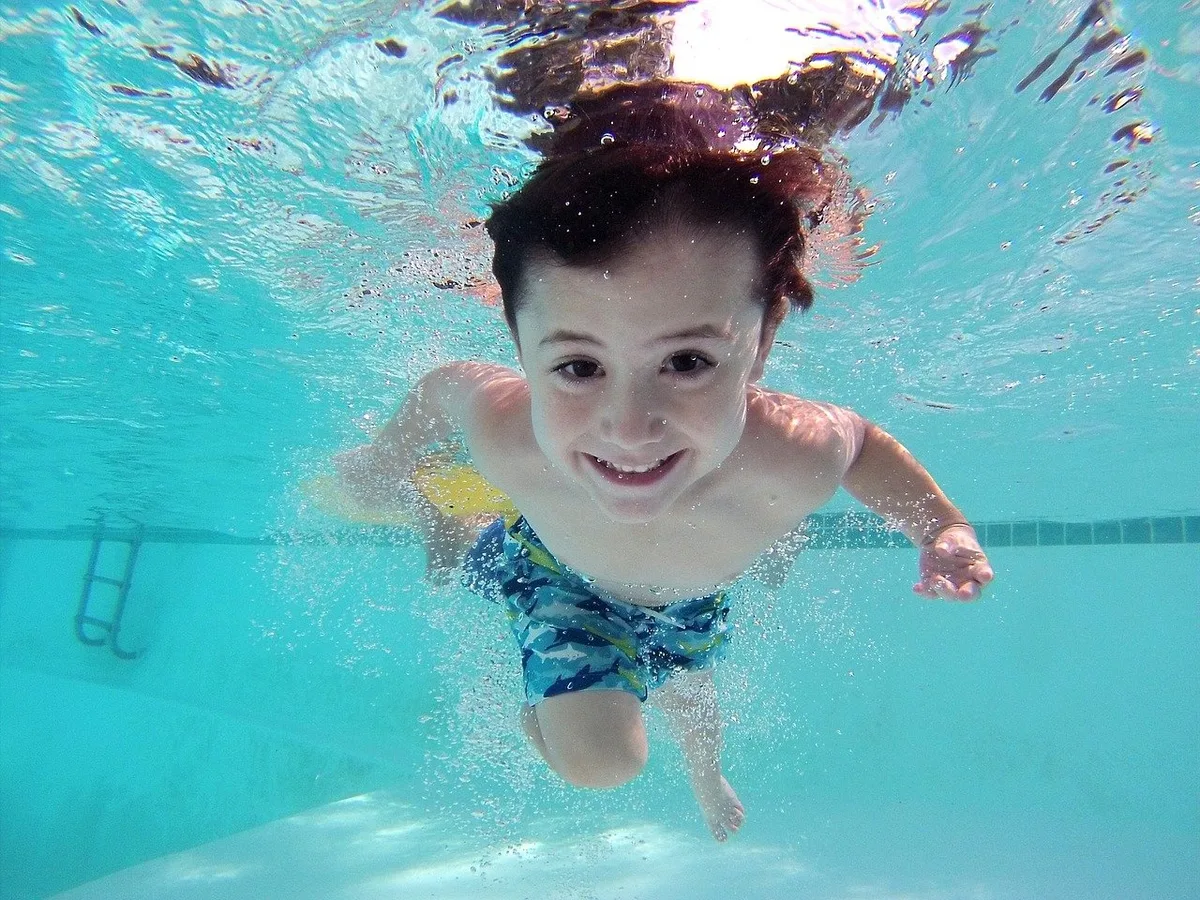
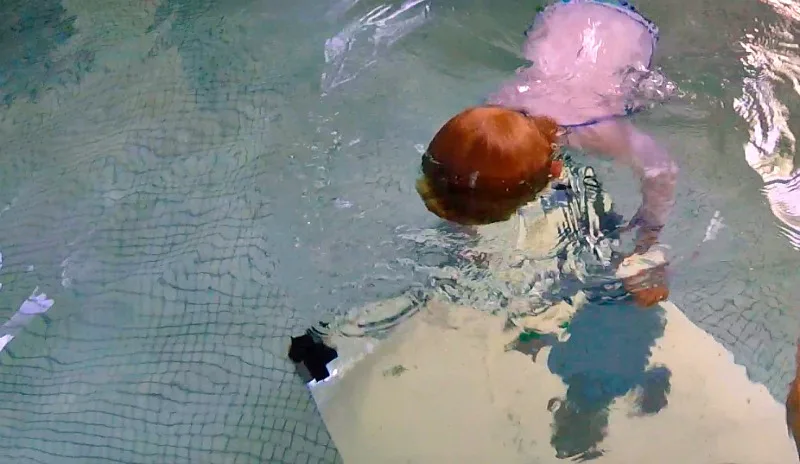
Demonstrate first: close your eyes tight, take a breath and hold it with your balloon face, then put your whole face in the water for 2 or 3 seconds.
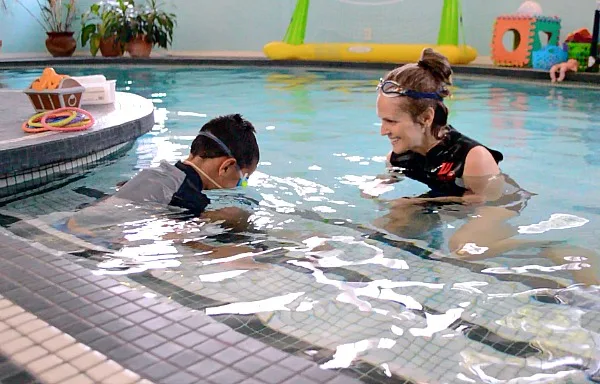
Encourage your child to do the same, even if it's just for a split second. If he resists, introduce the goggles and reassure him that they keep his eyes dry. If he continues to resist, break out the motivational games.
Keep practicing until your child can put his whole face in the water for at least 10 seconds — but don't overdo it. It won't necessarily all happen in one session.
Some of my students accomplish this by the end of their first 30-minute lesson. Others take between 4 and 10 lessons before they can consistently keep their whole face in the water for 10 seconds.
One step closer to conquering his fear of water
Now that he can put his whole face in the water, he's well on his way. But your child might regress — it happens all the time. One day he can put his face in for 10 seconds, the next it's 5. Don't worry. Just keep practicing. He'll reach his goal in his own time. And when he does, he'll be ready to learn how to front float.