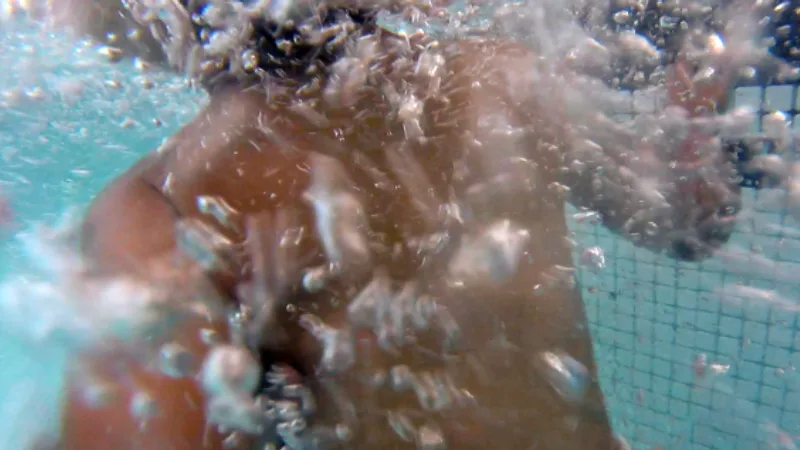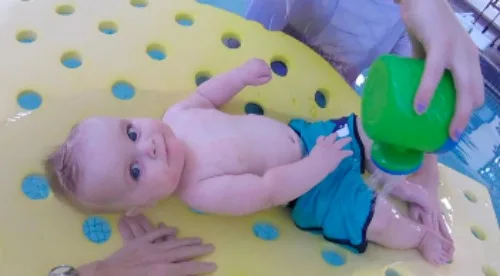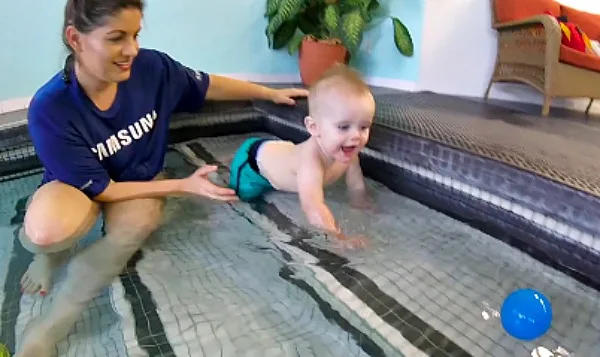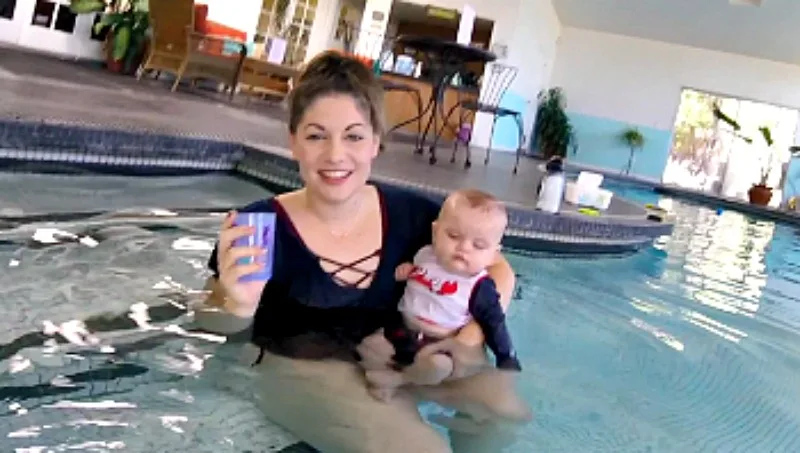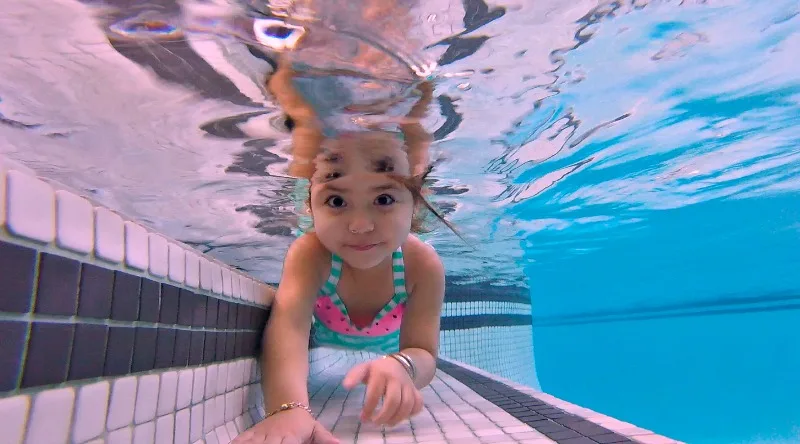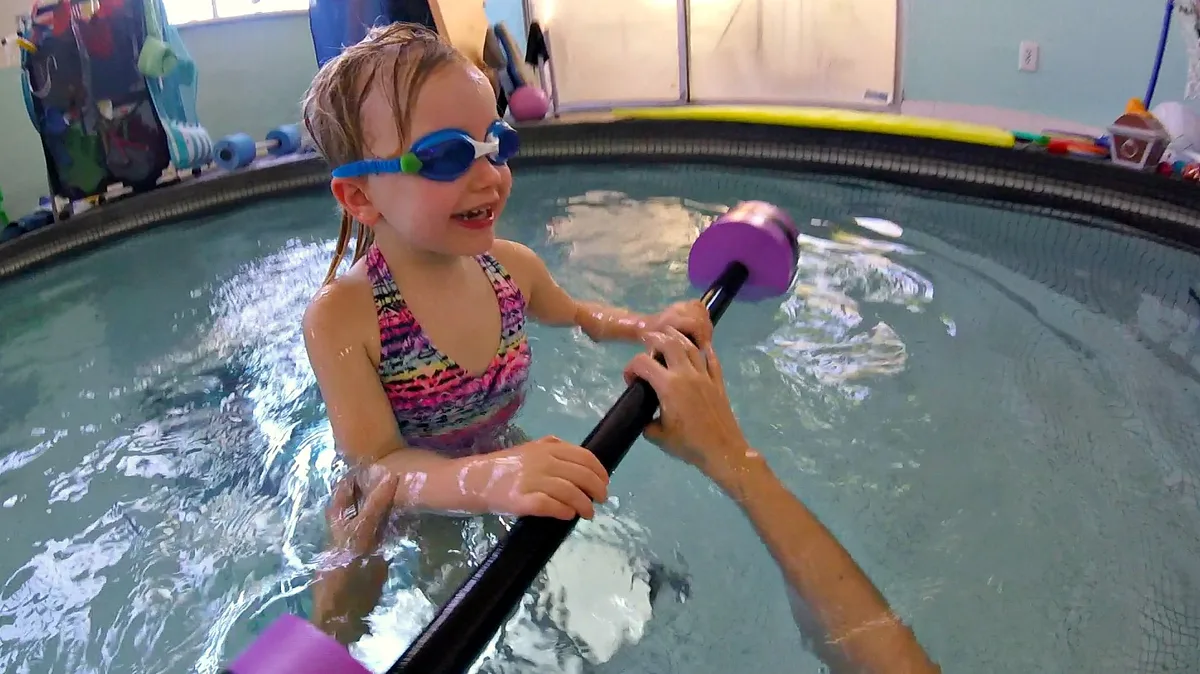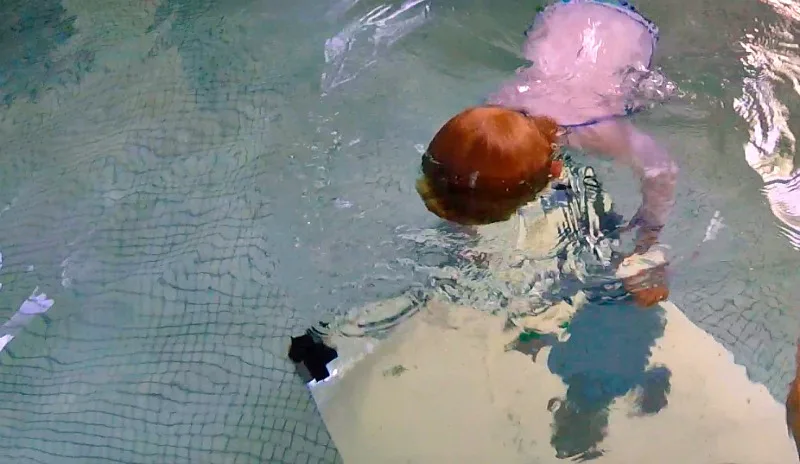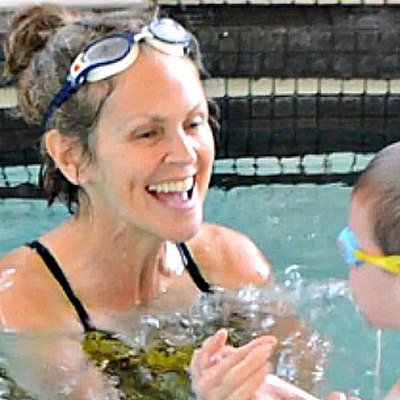
Your child is ready to learn how to front float if he can hold his breath and put his whole face in the water for at least 10 seconds. If he's not quite there yet, start with Help Your Child Learn to Put Their Face in the Water.
February 2019 update: I originally wrote this post in 2016, and while it still holds up for children 4 years old and up, I've since discovered another fantastic approach to teaching floating — extremely effective for this age group, and just as motivational for the 2-year-old+ child.
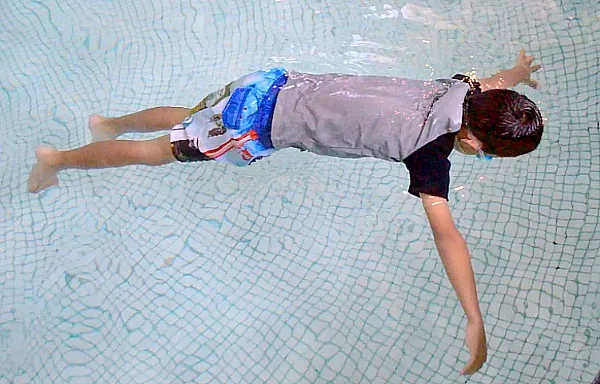
To teach your child to float, you'll need access to a swimming pool with wide, shallow steps. If that's not an option, a bathtub is a good starting point. (Never leave your child unattended in a bathtub.) An ideal water temperature is ninety to ninety-five degrees Fahrenheit.
Goggles and a nose clip
It's important that your child is as comfortable and relaxed as possible. In addition to the warm water, make sure his eyes and nose are happy too.
Head position for a successful front float
When floating on the front, a proper head position is essential. If you tilt your head up, lifting your chin, your body will start to descend. When your head is in a neutral position, your body will float.
Arms and legs should remain under the water
When first learning how to float, most children will arch their back, lifting their head and feet out of the water, which makes their body drop toward the bottom.
With more practice, they begin to relax and start to trust that the water will float them. The instinctive need to flail their limbs becomes a thing of the past.
Let the feet be where they want to be
Many children will try to kick their feet up toward the surface, believing a front float needs to be horizontal.
Everybody floats differently — it all depends on body composition. Some bodies float with the feet on the bottom, others float horizontally, and many float somewhere in between. Each is a perfectly good front float.
Encourage your child to do nothing with their feet. Let the feet be where they want to be. (Easier said than done.)
Is the water floating you?
If your child can hold himself up in a front float in the bathtub for at least ten seconds, and he's not trying to kick his feet up, it's time to check in with him.
Ask him, "Is your body floating? Is the water holding you up, or are you holding yourself up?" Your child will probably say the water is floating him — a step in the right direction.
Practice the front float in the bathtub
Have your child hold himself up in a push-up position with his arms supporting his weight. Now have him hold his breath, lower himself down, and put his face in the water.
Encourage him to keep his face in the water to a count of ten. He may not want to do it for that long at first — remember to practice patience and let him go at his own pace.
When he can do this for at least ten seconds consistently, with his head in a neutral position and his feet wherever they want to be, he's ready to experiment with letting go — and to move on to the back float.
Want a head start? Get my free course — How to Prepare Your Baby for Swim Lessons (0–8 months).