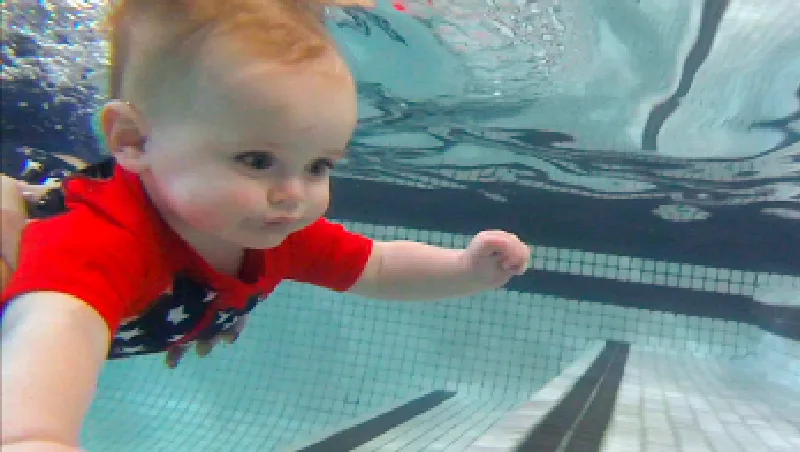
If your child can float comfortably on his front for at least five seconds, then he's ready to learn how to back float. If he can't perform a front float yet, go to Help Your Child Learn How to Front Float.
This post contains affiliate links. If you click an affiliate link and purchase the item, I may receive a small commission at no extra cost to you.
To teach the back float, you'll need access to a swimming pool, preferably one with wide, shallow steps (but it's not necessary).
Your child might need a swimming headband or a swim cap
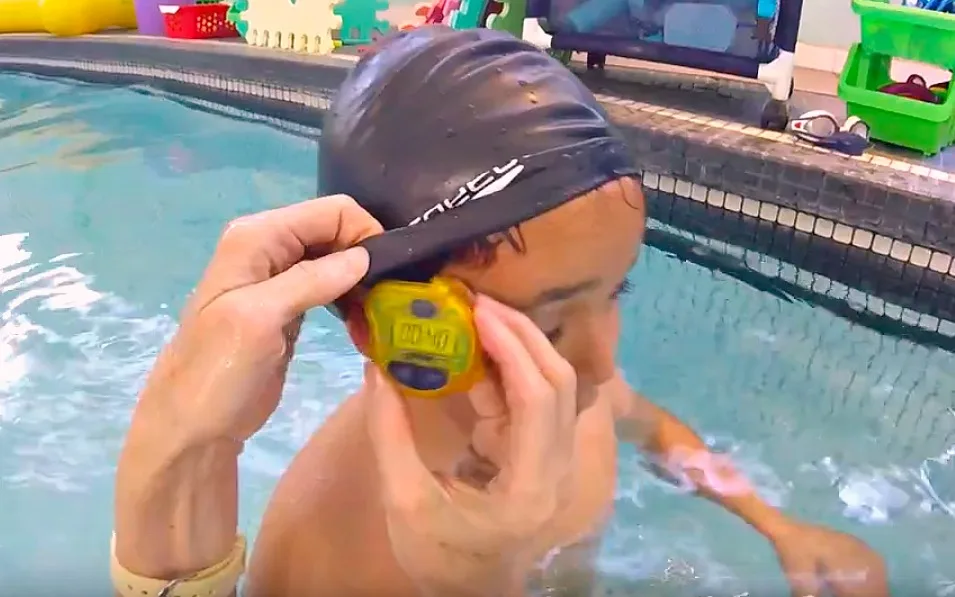
Even though your child may be comfortable, he might still be averse to water entering his ears when he attempts a back float. It's nothing that a swimming headband or an ear cap (swim cap) can't fix.
A swimming headband is a neoprene band that fits over the ears from the hairline and fastens at the back of the neck with velcro. If you choose a swim cap, I recommend a silicone ear swim cap — the design includes excess material that completely covers the ears. Both options keep the water from tickling the ears, which is really the issue for most children.
What about earplugs?
In my opinion, earplugs are more of a hassle than a remedy — they continually fall out. The ear swim cap or the headband (without earplugs) have worked 100% of the time with all of my ear-sensitive students.
The back float is easy for some and not so easy for others
How well you back float is determined by body composition. The more air in the lungs and the more body fat, the easier it is to float (good news for those who like desserts). Muscle and bone, on the other hand, sink — a very muscular person with little body fat will have trouble back floating and will need constant arm and leg action to stay afloat.
Head position for a successful back float
With the head back and the chin tilted up slightly, your child will be well on his way. When first learning, he probably won't tilt his chin up enough — but with practice he'll relax, position his head correctly, and let the water support him.
The back float doesn't need to be horizontal
Your child will probably kick his feet up toward the surface. Discourage this — when he kicks his feet up, his hips drop, and so does he.
Encourage him to stick out his belly button, pressing it up toward the sky, and let the feet be where they want to be. With the arms extended out like airplane wings and the head back, he'll float with ease.
For some children, the feet hang down, touching or almost touching the bottom — that's okay. Others float more horizontally, or somewhere in between. All are perfectly good back floats.
How to let the feet be where they want to be
This is easier said than done. Just telling your child "let your feet be where they want to be" may work for some grade-schoolers, but not so much for preschoolers. So instead, you can tell him to tuck his feet under his body — but make sure he still sticks out his belly button.
How to support your child in a back float
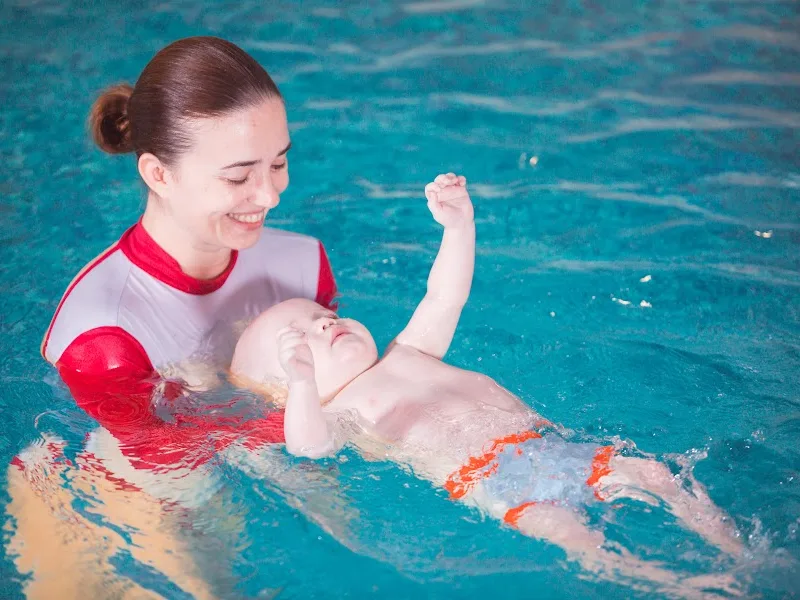
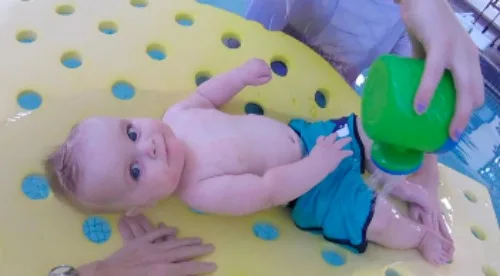
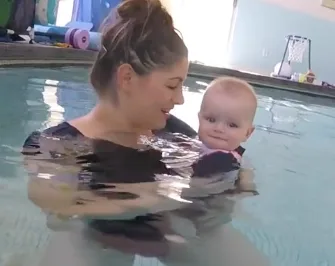
Position yourself so your shoulders are in the water. The back of your child's head rests on your shoulder. Support his lower back with one hand and place your other hand on his stomach.
If he's comfortable, cradle his head in the hand that was on his stomach and hold him close, right under your chin. If he's relaxed, extend your arms to separate his head from your body. As long as he's still happy, you can remove your hand from his back — but keep it close in case he loses control.
Motivate your child to back float
Some preschoolers will flat-out refuse to try. A little motivation goes a long way. The Melissa & Doug Sunny Patch Undersea Treasure Hunt is a big hit with my students as young as 15 months. Tell your child that when you hold him in a back float to a count of three, he can drop a coin into the treasure chest. He'll want to do it. Don't push him to do more than four back floats if he doesn't want to.
Experiment with letting go
If he remains calm while you support his head, pull him close and rest his head on your chest. Gently place your fingertips on either side of his head. Before letting go, make sure his head is tilted back enough. If he keeps his head back when you let go, he'll be back floating independently. You might need to adjust his arms, belly button, and feet.
For a successful back float, always remember: head back, arms out like airplane wings, stick out the belly button, and let the feet be where they want to be. You can also suggest he take a deep breath and hold it for a few seconds to make him extra buoyant.
Feeling the water float you on the shallow steps
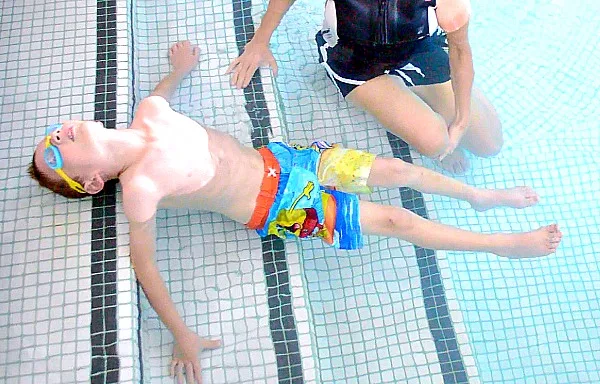
If your child wants to try by himself, the shallow steps are a great place to practice — but demonstrate first. Sit on one of the lower steps, support yourself with your hands as you lean back, and gently rest your head on the top step. Keep your hands on the step, do nothing with your feet, and stick out your belly button so you're no longer in contact with the surface. After a few seconds, let your hands rise off the step no more than an inch or two. Feel the water float you. Instruct your child to do the same, and assist him when placing his head on the step.
The back float at the wall
Using the wall forces your body into the correct position. Demonstrate first: hold the wall or gutter with both hands in about 4 feet of water. Lower yourself down and press your belly button against the wall. Lay your head back in the water as you extend your arms. When you feel like you're floating, drop your hands into the water — don't lift them above the surface, because their weight will push you under.
When it's your child's turn, support her if necessary. The wall forces the feet down. When she drifts away from the wall, she'll probably want to kick her feet up — encourage her to let the feet be where they want to be.
For a totally independent back float
Have your child keep practicing at the wall until he can do it independently. Then have him try without the wall, suggesting a nose clip at this point. I have my students imagine the wall is right in front of them and put their belly button against the "pretend wall." If they struggle, I put my hand out and have them pretend my hand is the wall.
How long will it take my child to learn to back float?
As long as he can front float independently for at least five seconds, he'll probably acquire the back-float skills within two to three practice sessions with your assistance. It might take a little longer if he's under five. A totally independent back float will take a few more sessions. Once he can do it unaided for at least fifteen seconds consistently, it's time to play with his newly acquired skills.
Want a head start? Get my free course — How to Prepare Your Baby for Swim Lessons (0–8 months).