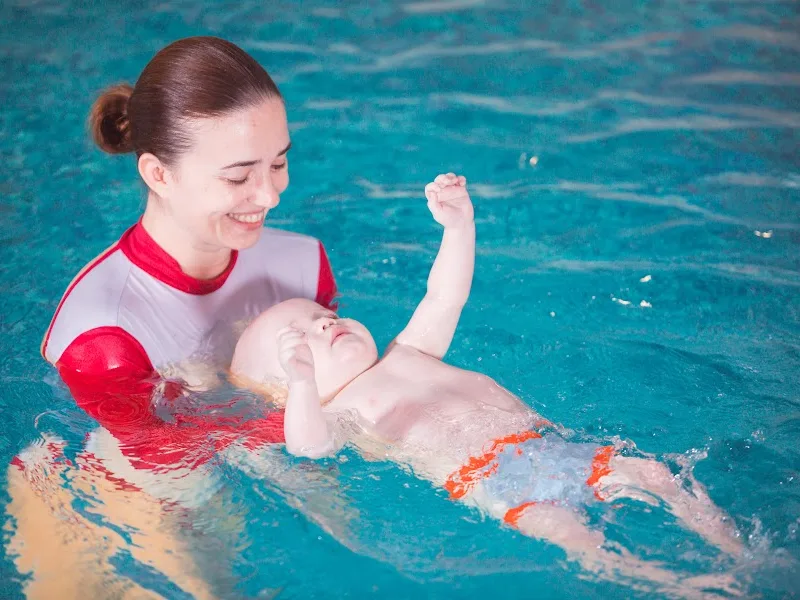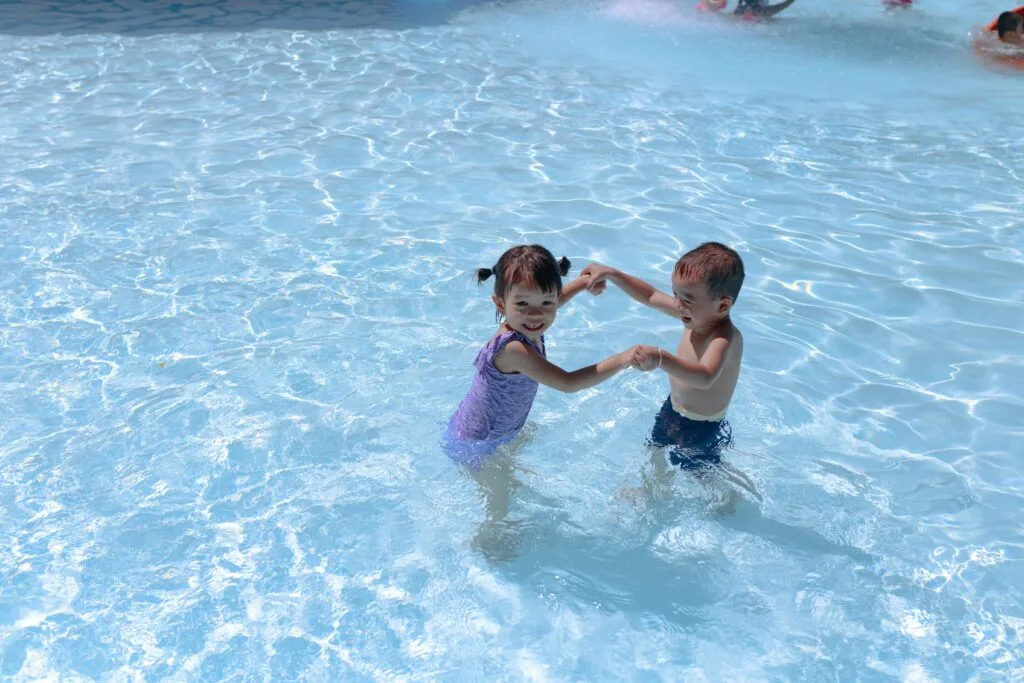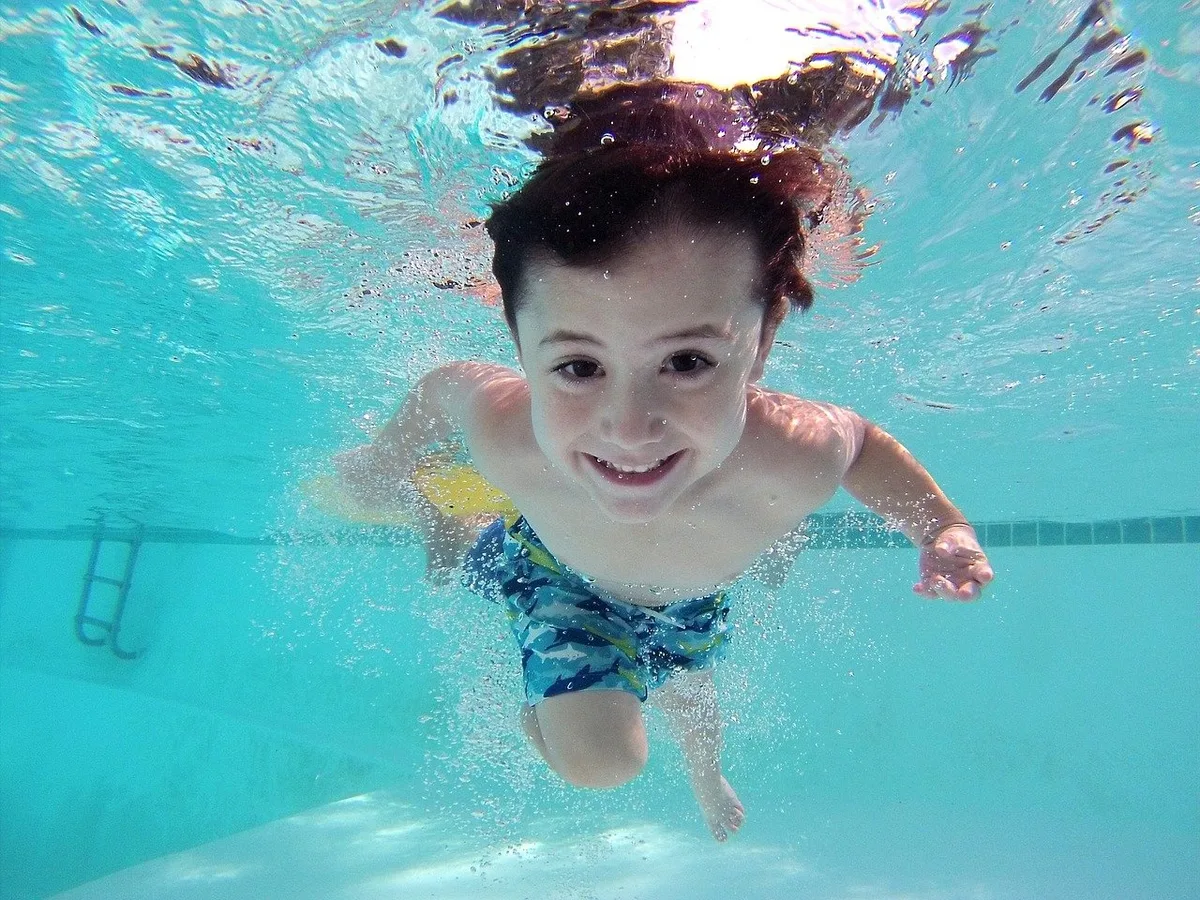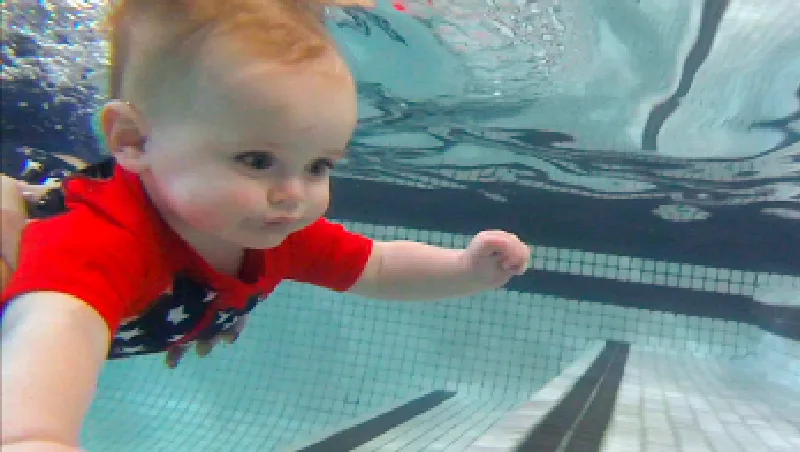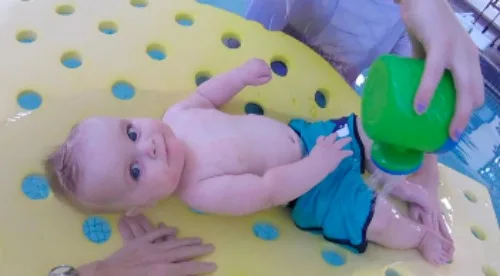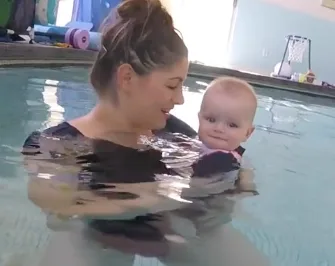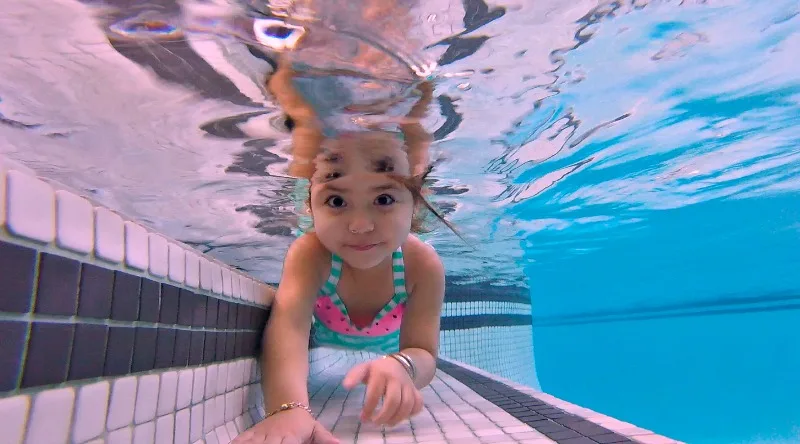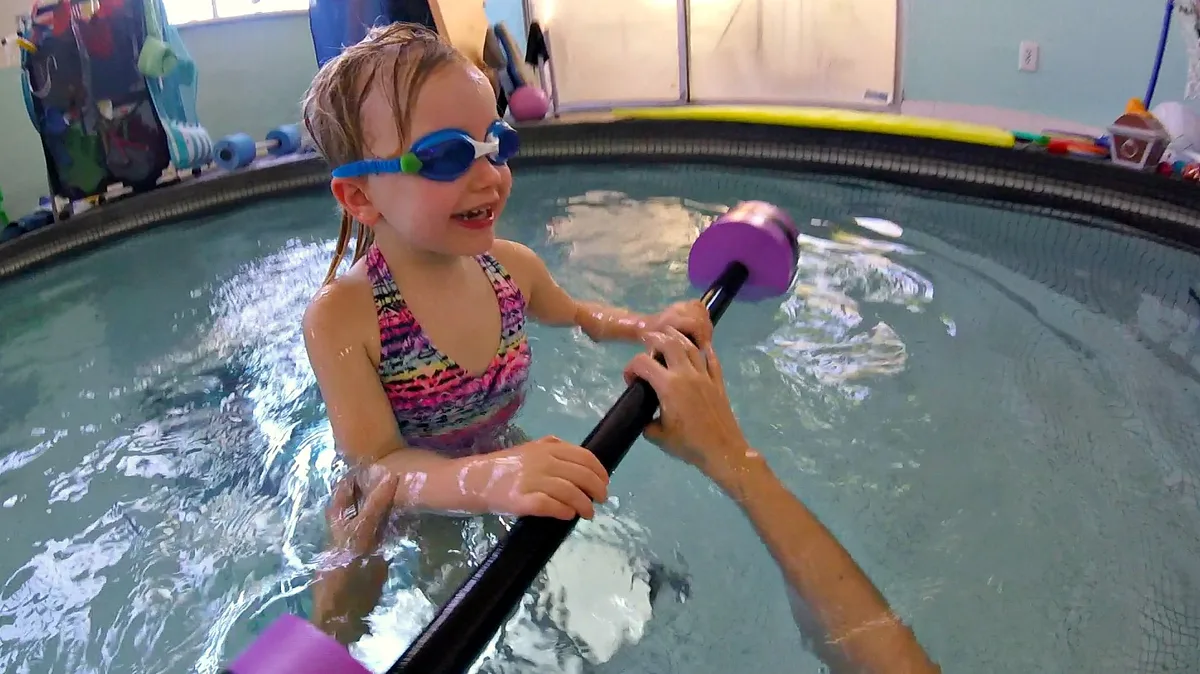
If your child can front float independently for at least five seconds and back float unaided for at least fifteen seconds consistently, then she's ready to learn how to roll and experiment with other ways of floating. Not there yet? Go to Front Float or Back Float.
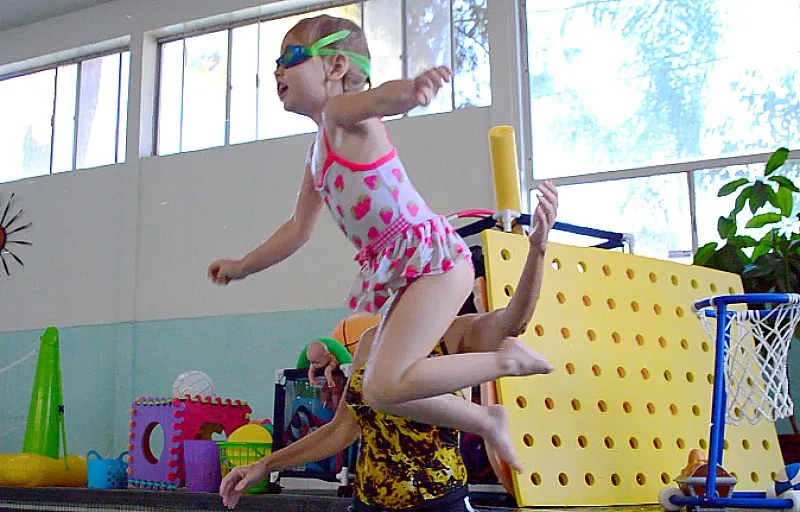
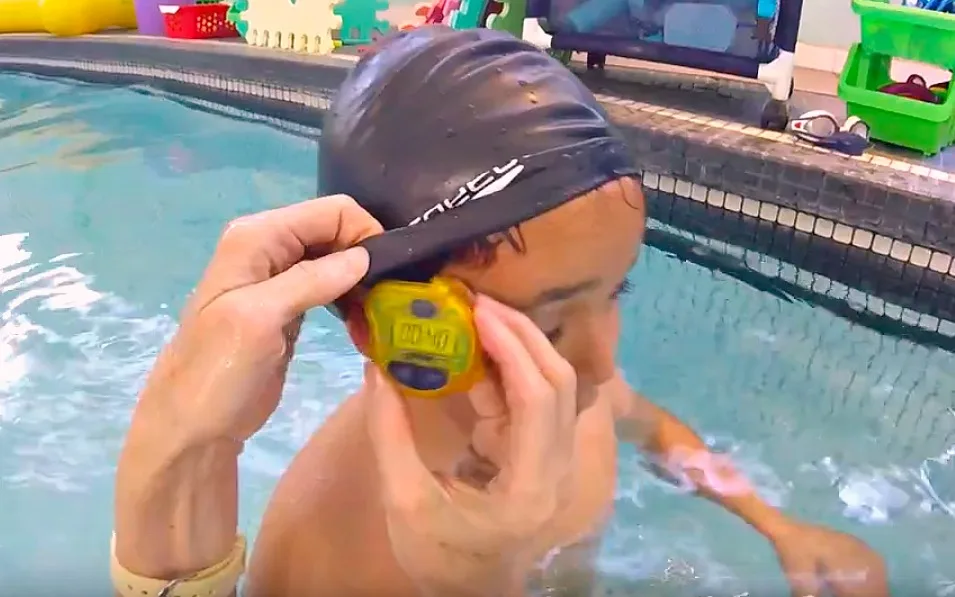
You'll need access to a swimming pool, and make sure your child has her goggles, a nose clip, and a swimming headband or ear cap (swim cap) if necessary.
This post contains affiliate links. If you click an affiliate link and purchase the item, I may receive a small commission at no extra cost to you.
Going from horizontal to vertical
Make sure your child can stand up after floating.
From a front float, have her lift her head out of the water (forcing the arms down), bring her knees under her body, place her feet on the bottom, and stand up.
From a back float, have her lift her head (tucking her chin to her chest), bring her feet up (which drops her hips), circle her arms back, down, then forward, place her feet on the bottom, and stand up.
Discover how hard it is to sink
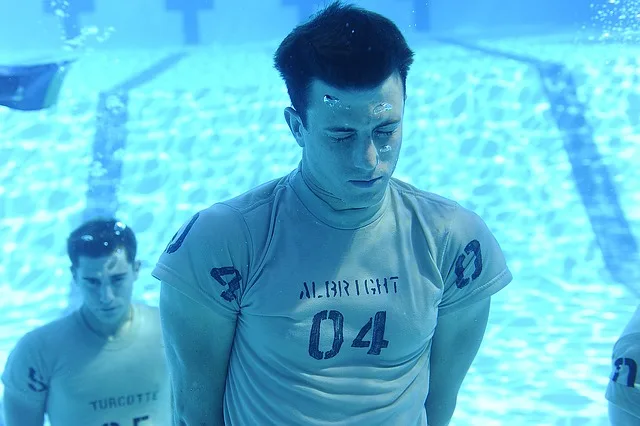
It's a lot of fun to try to sit on the bottom of the pool. Challenge your child to try it — she might get obsessed with it (it's happened with a few of my students). Don't discourage her; it's a great learning opportunity.
She'll discover that even if she wants to sink, it's next to impossible — her body will just float right back up to the surface. If she's not already convinced the water floats her, this will make her a believer.
Diving for objects
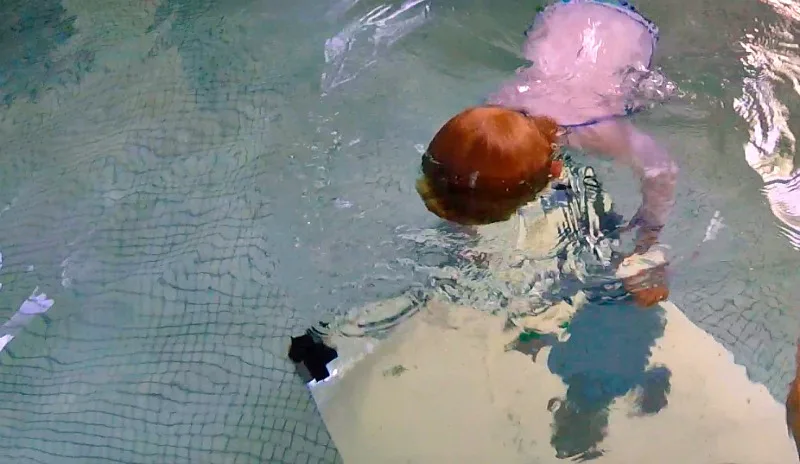
Diving for objects is a favorite among my students. Start by dropping a few sinkable objects — rings, torpedoes, or treasure — in two to three feet of water (go deeper for bigger kids). It's best to start with rings, as they're easier to grasp.
Let your child figure out how to get down to reach the object. After a few attempts, you can give her a little push toward the bottom if she needs help. To get to the bottom, she'll start in a front float, then bend forcefully at the waist, which drives her hips up and her torso down. You might say, "kick your feet down" or "stick your bottom up toward the sky" after she's in her front float.
Tuck float
A tuck float is when you float while hugging your knees and tucking your chin to your chest, forming the shape of a ball. In chest-deep water, instruct your child to take a breath, put her face in the water, tuck her chin to her chest, bring her knees up to her chest, and wrap her arms around her legs just below her knees — then allow her body to rise to the surface. Have her hold this for at least five seconds.
Jellyfish float
Pretend to be a jellyfish — imagine that your limbs and head are the tentacles. In chest-deep water, have your child hold her breath, put her face in the water, and let her arms, legs, and head hang, relaxing as much as possible. Try to be a jellyfish for at least five seconds. It doesn't matter if it isn't perfect — if she's willing to try it, that's all you can ask.
Roll over
Rolling over is an essential safety skill. Being able to roll over onto your back to rest and catch your breath comes in very handy when you get tired from swimming. A nose clip comes highly recommended at this point, especially when rolling from front to back.
Have your child perform a back float for a couple of seconds, then hold her breath, roll over, and stand up. Now try from a front float: have her hold her breath, front float for a couple of seconds, roll to her back, float for a few seconds, then stand up.
If she winds up in a sitting position, tell her to "first look at the bottom of the pool, then look at the sky or ceiling, not the walls." Also remind her to stick out her belly button to complete the back float.
Otter rolls
Another critical safety skill is the otter roll — it starts in a back float and ends in a front float, rolling forward rather than sideways. Have your child back float for a few seconds, then hold her breath and press her chin against her chest. If she maintains this without using her arms or legs, she'll end up in a front float. If she isn't rolling forward, it's likely because she's holding her back straight — encourage her to relax and round her back (like a tuck float).
Jumping in
Start by having your child jump into chest- or shoulder-deep water (anywhere shallower is discouraged — it's not safe). Have her put her toes over the edge, give her a point of entry about a foot from the side, and have her jump on your cue of "1, 2, 3." Stand in the pool at her side with your hand behind her back, ready to give a little shove if she's about to hit the edge.
Always make it a habit for her to get back to the wall after jumping in — even if all she does at first is stand up, turn around, and step back to the wall. It's teaching her to swim to safety.
What comes next?
Wean your child from the nose clip, goggles, and ear protection. If she isn't ready to give it all up yet, that's okay — she can still learn how to propel through the water.
Want a head start? Get my free course — How to Prepare Your Baby for Swim Lessons (0–8 months).