Goggles, Nose Clip & Ear Protection: How to Wean Your Child Off Them

Help your child eliminate the need for goggles, a nose clip, and ear protection.

Is your child comfortable in the shallow end of a swimming pool? Can he easily put his face in the water for at least ten seconds, front float for at least five seconds independently, back float for at least fifteen seconds unaided, and roll and retrieve objects from the bottom?

If he can do all of these with the aid of a nose clip, goggles, and/or ear protection, it's time to wean him off these crutches.

If your child feels he's not ready to give up this protection yet, don't force it (especially if he's only four). But there's no harm in a little encouragement. Sometimes ending up in the water is out of our control — to avoid a panicked situation, your child needs to be able to perform these skills without the extra gear. You can start in a bathtub or on the steps of a swimming pool.

How to wean your child from the nose clip

Demonstrate first. While sitting in a bathtub or on the steps, hold your nose closed with your thumb and index finger. Take a breath and hold it (fill your cheeks with air — "look at my balloon face"), put your face in the water, let go of your nose for a couple of seconds or more, hold your nose again, then take your face out.

Now have your child try it with his "balloon face." (If he's not willing, these games might motivate him.) Even a split second is fine — as long as he doesn't panic, he'll probably be okay. Then challenge him to lengthen the time.

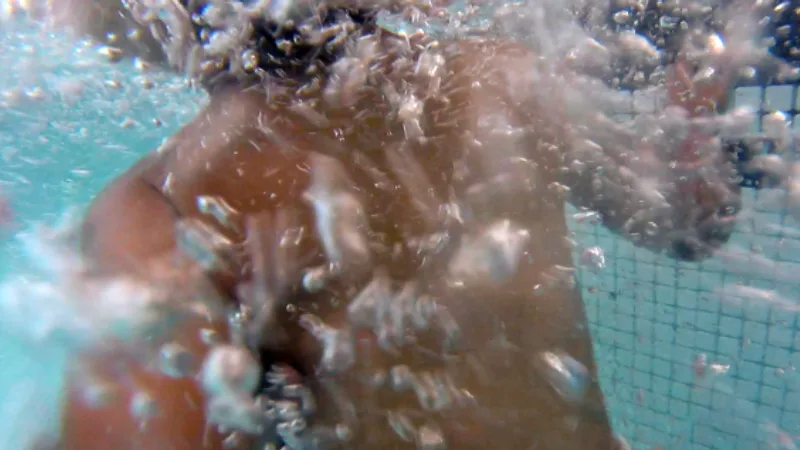
If water is going up his nose, have him blow bubbles with his nose, or hum when his face is in the water — humming automatically pushes air out of the nose.

Blowing bubbles with the nose

Try humming above the water first: have your child close his mouth and hum. Make sure he begins to hum before he puts his face in, continues humming while his face is in the water (blowing bubbles with his nose), and doesn't stop until his face is safely out.

Even though it seems simple, I still see bubbles coming from the mouths of some students because they aren't closing their mouths tightly enough. It's a challenge for some — many children can hold their breath, or just blow bubbles with their mouth, and still keep their noses happy. There's no one right way; it's personal preference. But ultimately, learning to blow bubbles with the nose is necessary for formal swimming strokes.

Once your child gets the hang of going face-first without a nose clip, have him practice all his skills without it. He may still find rolling over without a nose clip a challenge — even I get a little water up my nose sometimes. There will be times it just can't be avoided.

Freedom from the goggles

Your child doesn't have to give up goggles altogether, but it's a good idea to be comfortable without them — so that if he ended up in the water unexpectedly, he wouldn't panic.

In a bathtub or on the steps, have him practice putting his face in with his eyes closed (no goggles). When he's ready, have him open and close his eyes like a blink. He'll probably feel a slight stinging that disappears soon after. Encourage him to try opening his eyes for a couple of seconds — but don't force it; try again another day and set goals to lengthen the time.

Being independent of goggles gives him more freedom in the water. Goggles still have their place, though — they help you see clearly underwater, and some swim schools require them.

Time to eliminate the ear protection

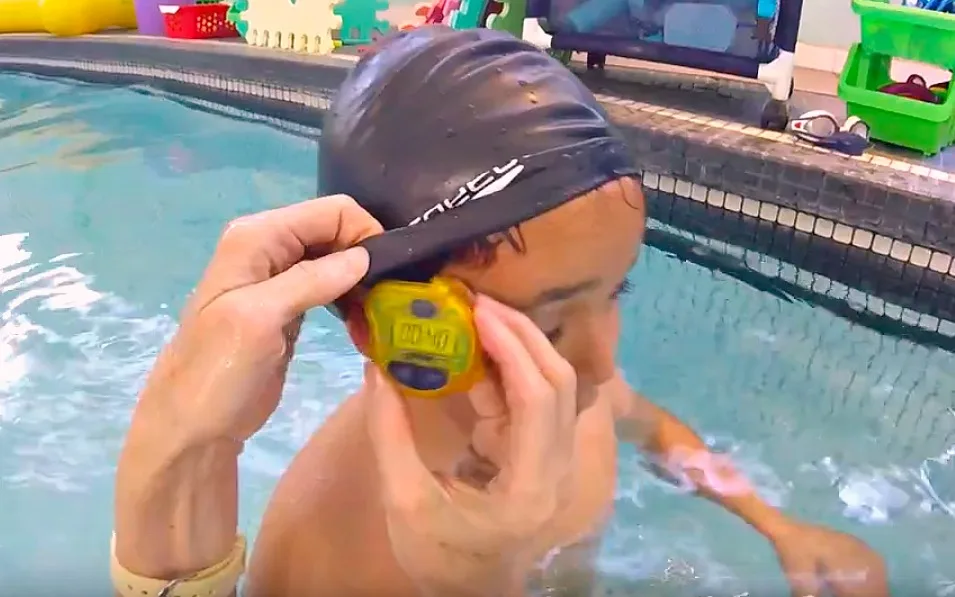
You might not even need to help with this — he may simply forget about it one day and start swimming without it. Let your child decide when he's ready to give up the ear swim cap, swimming headband, or ear plugs.

Check in now and then to see if he'll put an ear lobe in the water. Encourage one whole ear with motivational games: have him hold the edge of the pool, turn his head to one side, and lower it into the water; if he's happy, try the other ear. If all goes well, encourage him to submerge his whole head.

Most of my ear-sensitive students only need ear protection when they swim or float on their back — they don't like how the water tickles their ears. Reassure your child that it's okay to have water in his ears while swimming: it won't hurt him, and it goes away as soon as his head is out.

How to prevent swimmer's ear

I have an excellent little home remedy. Since I've been following this regimen, I haven't had a single ear infection.

Here's what I do:

  1. Empty one of those little bottles of ear-drying drops and replace the contents with 1 tablespoon of white vinegar and 1 tablespoon of rubbing alcohol. (I reuse the same container over and over.)
  2. Administer 5 drops in each ear every time I get out of the pool. No need to lie down for 5 minutes — just 5 drops in each ear, and that's it.

Pediatrician Dr. Sears recommends the same procedure.

Important — do not place alcohol into an already sore or infected ear; it will be very painful. If your child has swimmer's ear and gets water in it, use just white vinegar.

(There's an Australian product called Aqua Ear with the same basic ingredients, but its label says it's not recommended for children under 3. I haven't found a similar product in the US.)

This home remedy has been a game-changer — and this is coming from someone who spends 5 to 7 hours a day, 5 days a week, in the pool.

Where do we go from here?

If the nose clip is now a thing of the past, breath control is an appropriate next step. Otherwise, I'd recommend your child learn how to propel through the water.

Want a head start? Get my free course — How to Prepare Your Baby for Swim Lessons (0–8 months).
← All articles
More from Tessa

Related articles

Small Business Ideas for Teachers
Are you looking for small business ideas for teachers? Why not start a private swim school? Here's how to get started!
3 Amazing Health Benefits Of Swimming In Toddlers That Will Blow Your Mind!
Everybody knows that sports have amazing health benefits for those who participate. Yet, we feel that people rarely speak of the amazing health benefits
Secrets to a More Family-Friendly Yard
Could your home's outdoor space use an upgrade? More families are spending time together these days, and a yard that's ready for various activities can be a joy.
Your Family's Guide to Swimming Pool Safety: Top Resources and Tips
Swimming is a perfect way for your family to have fun and stay cool in the late summer and into the early fall.
Teach Your Child to Respect the Water
How to Teach Your Child to Respect the Water. Independent play teaches them to respect the water. When children understand that water demands
Can Babies Swim Naturally? The Mammalian Diving Reflex
Can babies swim naturally? Short answer. No. You might think they can because most babies, not all, are born with a diving reflex commonly referred to as
How Do I Know If My Child Is Dry Drowning?
Dry drowning and secondary drowning, also called delayed drowning, are not accepted medical terms. Here are the facts every swim parent should know.
What Is the Best Age to Start Swimming Lessons?
What is the best age to start swimming lessons? The answer is four months of age. if you give your infant the opportunity to early water exposure, he's...
How Do I Make My Child More Comfortable in Water?
How do I make my child more comfortable in water? Whatever you do, don't force your child to do anything they don't want to do. Your child is more...
Baby Fear of Water: Does Your Baby Suddenly Have a Fear of Water?
A parent contacted me with this question: How do you help a baby/toddler overcome the fear of water? My son is now terrified when we have to rinse shampoo
How to Prepare Your Baby for Swimming Lessons Part 3
Teach your baby independence Just as you teach your baby to be independent on land, learning independence in the water is even more crucial. I don't mean
How to Prepare Your Baby for Swimming Lessons Part 2
Teach your baby to float on his back. Tips on how to get your baby comfortable with this life-saving skill.
How to Prepare Your Baby for Swimming Lessons
Conditioning your baby to hold their breath is the best way to prepare your baby for swimming lessons. They've recently emerged from a watery environment.
How I Stopped Swimmer's Ear Infections Once and for All
Are you or your children susceptible to swimmer's ear infections, like I am? If so, I have an excellent little home remedy for you.
Tips and Tricks to Motivate the Scared Child to Float
Easy games and activities to motivate a scared child to practice floating — turtle eggs, a bar float, a kickboard, and more.
How to Teach Assisted Floating: Watch This Video
Alexa is 3-years-old. She has mastered breath control. The next step in the learn to swim process is assisted floating. Here's how to introduce it.
Respect for Deep Water: No Child Is 100% Water Safe
David has had regular exposure to the water which has taught him respect for deep water. He has learned a lot about water safety and often is required...
What Is Breath Control in Swimming?
Breath Control. Remember Abram from about a month ago? Well, now he's one month shy of 4-years-old and has officially mastered breath control.
4 Must-Haves for Your Vacation Getaway: Taking a Trip over the Holidays?
Check out these 4 must-haves for your holiday adventures. A baby wetsuit is an excellent option for infants instead of a swimsuit or in addition to it.
Got a Child Afraid of Water on the Face?
Meet Abram. Four simple activities to get kids as young as 2 to put their face in the water — without goggles or a nose clip.
Finis Tempo Trainer: Not Just for Competitive Swimmers
The Finis Tempo Trainer is like a metronome for swimming. It's used to set a specific pace at which you want your student to kick or pull in the case of...
Shallow Water Blackout: What Every Parent Should Know
Have you heard of shallow water blackout? Every parent should know about the dangers of it and how to prevent it.
Swim Mirror: Best Teaching Tool for Swimmers of All Levels
The swim mirror, made of reinforced polished aluminum, is one of the best investments I've ever made for my swim school.

Have a question about swim lessons or water safety? I'd love to help.

Get in touch