“She’s dead,” were the first two words written in a Facebook post.
A mother of one of my students showed me the Facebook post from a national physician mom’s Facebook group to which she belongs.
One of the members, a pediatrician, shared with the group that her daughter drowned that morning in their pool.
She said that the pool guy left the gate open.
From the pictures that she posted, her daughter looked to be about 2-years-old. I can’t think of anything worse than outliving your child. My heart breaks for her.
She also mentioned in her post that she preaches pool safety daily in her practice.
This post has made the mother of my student far more aware of the dangers of having a backyard pool.
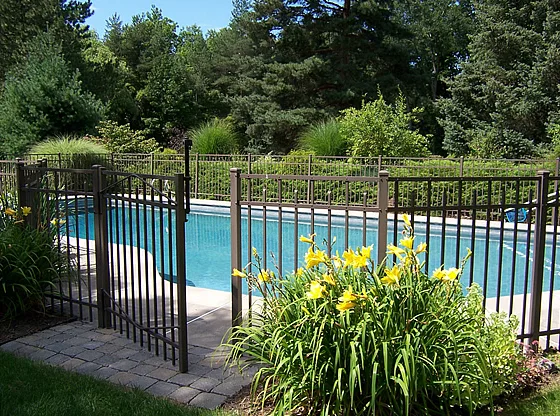
Her pool is fenced in which is essential when you have young children whether they can swim or not.
But until now, it never occurred to her to make sure the gate is closed after the pool guy leaves.
She also told me that she’s at work all day and doesn’t even know on which day her pool gets serviced.
Up until now, I never would’ve thought of such a simple thing as the gate being left open, by anyone for that matter, not just your pool service professional.
But now that this has been brought to our attention why not make it a habit to check your gate daily and especially after your pool has been serviced assuming you know what day that is.
Here are some interesting facts I found on this New Zealand website.
“Most pools have the correct barriers or fencing in place, but the gates leading to the immediate swimming pool area are often faulty. These gates must be self-closing and latching.” East said.
“Often all that’s required is a simple fix to a gate by lubricating the latches and tensioning or replacing springs and hinges. But for some reason, people are neglecting this maintenance.”
Mills said this was the problem across the country.
“Mechanical failure of gates and latches is the number one cause of drowning fatalities where children have been able to access restricted swimming areas,” he said.
The CPSC (United States Consumer Product Safety Commission) reports one out of every ten child pool drownings happens after the child figures out how to get through the pool fence.
From this Washington NBC news story. If you do have a pool fence, inspect it regularly:
- First, check for any spaces or holes that toddlers can slip through.
- Do the fist test. If your fist can fit through any gap in the fence, it’s too large. It should be less than four inches.
- And finally, check along the ground to make sure that older children can’t lift it up enough to let smaller children through.
And if you don’t have a pool fence, please consider installing one (climb-resistant mesh fence is best) around your pool.
Depending on the law that pertains to you, it will probably need to be somewhere between four and six feet high with a self-closing, self-latching gate with pool alarms.
A four-foot fence is the minimum height requirement in some regions. Is it just me, or does that seem awfully short?
And even if you do have a fence, close supervision is still essential. Children will find creative ways to scale it. Remove any structures that gain access to the pool. Some structures include but are not limited to outdoor furniture, climbable trees, decorative walls and playground equipment.
Also if your children often visit friends and or relatives with a pool, please encourage them also to fence it in.
Do the same for other water sources, such as spas and landscape water features.
If your next door neighbor has a pool, hopefully, it’s fenced in. If not make sure that your child doesn’t have any access to your neighbor’s pool:
- Check your yard fence for any spaces or gaps that your little one might be able to slip through.
- Do the fist test just as you would do with your pool fence. Any four-inch holes are too large.
- And remember to check along the ground. Can an older child help a smaller child crawl under your fence?
According to the CDC (Centers for Disease Control) Among children ages 1 to 4, most drownings occur in home swimming pools.
And many of these swimming pools are neighbor’s pools. I just Googled “drowning in neighbor’s pool.” A massive amount of results popped up.
Children sneak out of their homes early in the morning or in the middle of the night, and then they’re later found in a neighbor’s pool not breathing and unresponsive. There are countless stories like this.
If you read my last email, I cited Tovah Klein, Ph.D., director of the Barnard College Center for Toddler Development:
“Starting around 18 months, toddlers suddenly realize, ‘I’m my own person,’” Dr. Klein says. So they’re eager to get out of the stroller and check out the world on their own. “They don’t understand that when they run off, adults can’t necessarily see or protect them,” she explains.
To recap:
- If you don’t have a fence, install a climb-resistant mesh fence as soon as possible.
- Make sure your gate is closed.
- Maintain your self-closing self-latching gate.
- Check for any spaces or holes that toddlers can slip through. Do the fist test.
- Check along the ground to make sure that older children can’t lift it up enough to let smaller children through.
- Don’t allow your kids to climb the fence. Remove any structures that gain access to the pool.
- And even if you do have a fence, close supervision is still essential.
- If your children often visit friends and or relatives with a pool, encourage them to also fence it in.
- If your neighbor has a pool, check your yard fence for any spaces or holes. Do the fist test.
- Check along the ground to make sure small children can’t get through.
To learn more about how to keep your children from escaping your home, check out my last newsletter.
If you have any thoughts on the subject or experiences that you would like to share, I would love to hear from you.
The more real stories that we can share the more of an impact it will have. I witnessed firsthand how the Facebook post invoked an unquestionable emotional response.
She’s more motivated now than ever before to make sure her children are water safe.
It also made me more aware of just how these real and compelling stories can inspire parents to take the necessary steps to ensure their children are safe from any water hazards.
So, if you have any stories at all that you think might produce the same results, please share. If a family installs a fence around their pool because of sharing your personal experience; you’d be likely saving a life.
And by merely sharing this newsletter you’d be doing a service. So please share with everyone or with anyone that you think might benefit from this information.
Love the water but fence it in,
Tessa
P.S. Get the FREE water safety app to help ensure your family stays safe in, on and around the water. It includes kid-friendly videos and quizzes. Search the iTunes app store for Swim by American Red Cross or click here. For Google Play you can use the same search parameters or click here. It provides the latest in water safety guidance to help ensure your family stays safe in, on and around the water.
P.P.S. To start your child on the path to becoming water safe, click here.
Want a head start? Get my free course — How to Prepare Your Baby for Swim Lessons (0–8 months).