Teenage Risk Taking Statistics: When Will My Child Ever Learn?

Two weeks after I got my driver’s license when I was sixteen years old, I got into a car accident. My fault. It was a minor accident, but devastating to me at the time. Teenage risk taking statistics
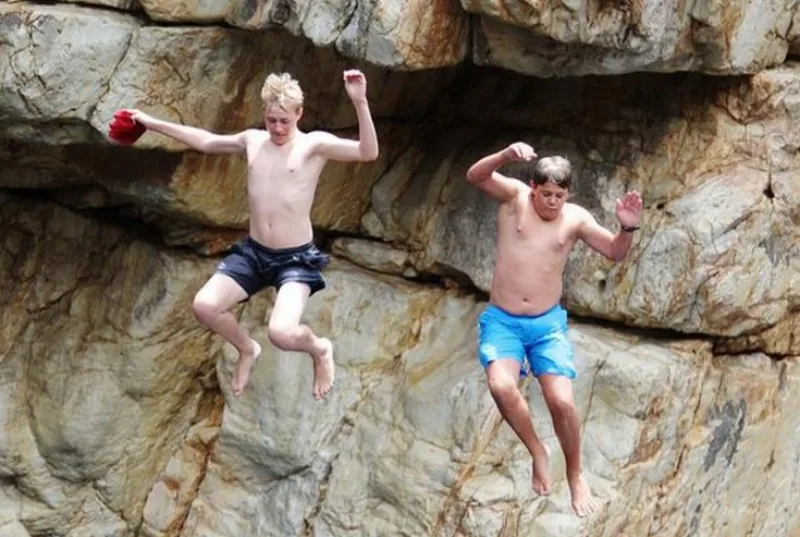
Teenagers jumping off a cliff into water.

So here’s what happened. I had pulled into an intersection where the “left turn yield on green” rule applied. In other words, no “left turn signal” at said intersection.

I’m waiting until I think it’s safe to go. Meanwhile, a big white van is blocking my view from being able to see any oncoming traffic as he is also trying to accomplish a left turn going in the opposite direction.

So what do I do? I just go. Then BAM! SMASH! I never felt panic like that in my life. I didn’t know what to do, being so young and innocent yet 100% at fault.

Why am I telling you this? Because…

drowning is the second leading cause of unintentional injury-related death for children ages 1 to 14 years.

And older children within this age group most often drown in natural water settings.

The reason for this is because older children like to take risks, even when their parents have warned them of the dangers.

Adolescents think they’re invincible. I remember thinking to myself when I chose just to make the left turn that I’ll make it through unscathed. Was I wrong or what?

I can think of many other risks that I took as an adolescent simply because of believing that nothing bad ever happens to me.

I was lucky. It could’ve been much worse. teenage risk taking statistics

A mother of one of my students (almost 18 months old), asked me the other day, and I’m paraphrasing here, “at what age will my child stop running toward the pool on his own.”

And when her son in the past has made a beeline for the water, he was probably thinking to himself “I can do this, I’ll be fine, it’s all good. Nothing bad will happen.”

The answer to that question is about 26 years old. Kidding, but also not kidding.

Thank you, Amy, for your question. I was just as intrigued as you were to find out the answer.

So here’s the answer to your question in more depth. teenage risk taking statistics

Parents are always warning their children of the dangers that surround them on a daily basis.

Everything from looking both ways before crossing the street to smoking is bad for you.

Do children listen to these warnings? Not so much. It seems as parents we have to remind our children of the dangers of risky behavior always.

Pnas.org says that the reason for this is because humans show a natural tendency to discount bad news while incorporating good news into beliefs (the “good news–bad news effect”), an effect that may help explain seemingly irrational risk taking.

Npr.org explains that positive information is processed in many parts of the brain, while negative information tends to be centered in the prefrontal cortex, says Tali Sharot, a psychologist who studies the neuroscience behind decision-making at University College London. That’s the part of the brain that matures last, into the 20s in many cases. It’s the area in charge of judgment and problem-solving.

“We learn better from good news than from bad news,” Sharot says.teenage risk taking statistics

So children are more likely to adjust their behavior if the information is presented to them in a more positive light. For, e.g., “You’ll have a better chance of being accepted to your dream college if you get your homework done on time.”

When we’re talking about preventing drowning, just remember those very young children will need to be constantly reminded to stay away from water hazards, wear life jackets, stay close to adults, never swim alone, and the list goes on because they WILL forget.

And keep telling them until they’re confident swimmers or well into their 20s whichever comes first.

If you have any thoughts on the subject or experiences that you would like to share, I would love to hear from you.

Love the water,

Tessa

P.S. Get the FREE water safety app to help ensure your family stays safe in, on and around the water. It includes kid-friendly videos and quizzes. Search the iTunes app store for Swim by American Red Cross or click here. For Google Play you can use the same search parameters or click here. It provides the latest in water safety guidance to help ensure your family stays safe in, on and around the water.

P.P.S. To start your child on the path to becoming water safe, click here.

Want a head start? Get my free course — How to Prepare Your Baby for Swim Lessons (0–8 months).
← All articles
More from Tessa

Related articles

Small Business Ideas for Teachers
Are you looking for small business ideas for teachers? Why not start a private swim school? Here's how to get started!
3 Amazing Health Benefits Of Swimming In Toddlers That Will Blow Your Mind!
Everybody knows that sports have amazing health benefits for those who participate. Yet, we feel that people rarely speak of the amazing health benefits
Secrets to a More Family-Friendly Yard
Could your home's outdoor space use an upgrade? More families are spending time together these days, and a yard that's ready for various activities can be a joy.
Your Family's Guide to Swimming Pool Safety: Top Resources and Tips
Swimming is a perfect way for your family to have fun and stay cool in the late summer and into the early fall.
Teach Your Child to Respect the Water
How to Teach Your Child to Respect the Water. Independent play teaches them to respect the water. When children understand that water demands
Can Babies Swim Naturally? The Mammalian Diving Reflex
Can babies swim naturally? Short answer. No. You might think they can because most babies, not all, are born with a diving reflex commonly referred to as
How Do I Know If My Child Is Dry Drowning?
Dry drowning and secondary drowning, also called delayed drowning, are not accepted medical terms. Here are the facts every swim parent should know.
What Is the Best Age to Start Swimming Lessons?
What is the best age to start swimming lessons? The answer is four months of age. if you give your infant the opportunity to early water exposure, he's...
How Do I Make My Child More Comfortable in Water?
How do I make my child more comfortable in water? Whatever you do, don't force your child to do anything they don't want to do. Your child is more...
Baby Fear of Water: Does Your Baby Suddenly Have a Fear of Water?
A parent contacted me with this question: How do you help a baby/toddler overcome the fear of water? My son is now terrified when we have to rinse shampoo
How to Prepare Your Baby for Swimming Lessons Part 3
Teach your baby independence Just as you teach your baby to be independent on land, learning independence in the water is even more crucial. I don't mean
How to Prepare Your Baby for Swimming Lessons Part 2
Teach your baby to float on his back. Tips on how to get your baby comfortable with this life-saving skill.
How to Prepare Your Baby for Swimming Lessons
Conditioning your baby to hold their breath is the best way to prepare your baby for swimming lessons. They've recently emerged from a watery environment.
How I Stopped Swimmer's Ear Infections Once and for All
Are you or your children susceptible to swimmer's ear infections, like I am? If so, I have an excellent little home remedy for you.
Tips and Tricks to Motivate the Scared Child to Float
Easy games and activities to motivate a scared child to practice floating — turtle eggs, a bar float, a kickboard, and more.
How to Teach Assisted Floating: Watch This Video
Alexa is 3-years-old. She has mastered breath control. The next step in the learn to swim process is assisted floating. Here's how to introduce it.
Respect for Deep Water: No Child Is 100% Water Safe
David has had regular exposure to the water which has taught him respect for deep water. He has learned a lot about water safety and often is required...
What Is Breath Control in Swimming?
Breath Control. Remember Abram from about a month ago? Well, now he's one month shy of 4-years-old and has officially mastered breath control.
4 Must-Haves for Your Vacation Getaway: Taking a Trip over the Holidays?
Check out these 4 must-haves for your holiday adventures. A baby wetsuit is an excellent option for infants instead of a swimsuit or in addition to it.
Got a Child Afraid of Water on the Face?
Meet Abram. Four simple activities to get kids as young as 2 to put their face in the water — without goggles or a nose clip.
Finis Tempo Trainer: Not Just for Competitive Swimmers
The Finis Tempo Trainer is like a metronome for swimming. It's used to set a specific pace at which you want your student to kick or pull in the case of...
Shallow Water Blackout: What Every Parent Should Know
Have you heard of shallow water blackout? Every parent should know about the dangers of it and how to prevent it.
Swim Mirror: Best Teaching Tool for Swimmers of All Levels
The swim mirror, made of reinforced polished aluminum, is one of the best investments I've ever made for my swim school.

Have a question about swim lessons or water safety? I'd love to help.

Get in touch