Deep Water: Help Your Child Overcome Their Fear of It

If your child is completely comfortable in shallow water, then she's ready to conquer her fear of deep water.
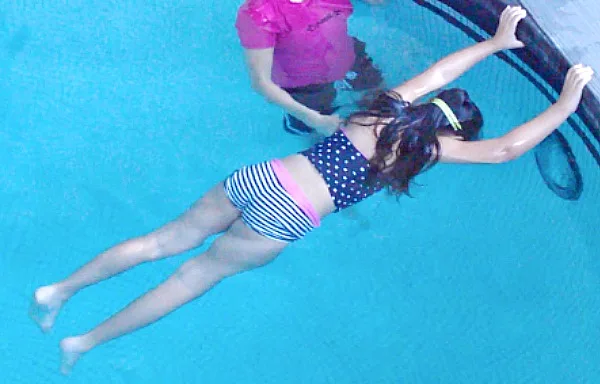
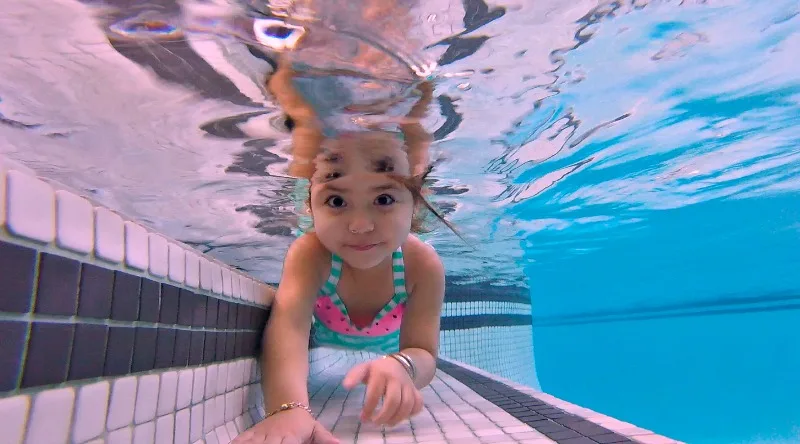
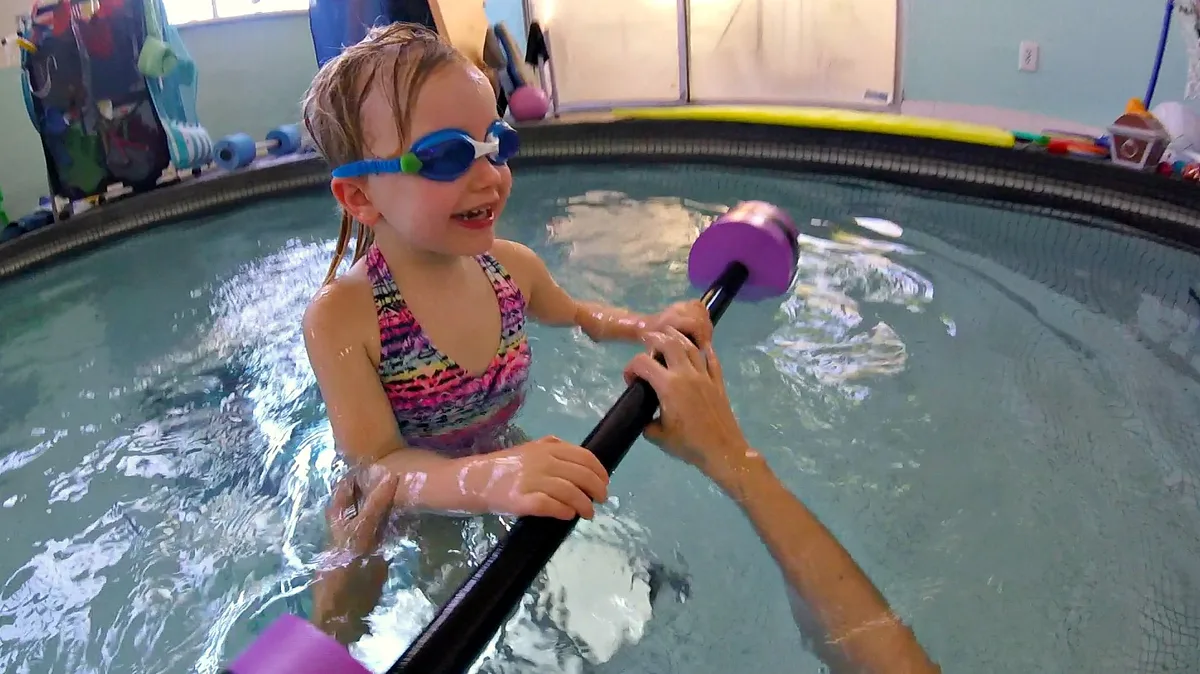
A child practicing a front float in the deep end

This post contains an affiliate link.

By "completely comfortable," I mean she can front float independently for at least ten seconds, back float unaided for at least thirty seconds, and roll in various ways, propel through the water, bob, and dive for objects. Now she's ready to apply these skills to deeper water.

Shallow water vs. deep water

Ask your child, "What do you think will happen when you try to float in the deep water?" Chances are she'll reply with a resounding "I'll sink!" Assure her that the deep water is the same as the shallow water — it does just as good a job of supporting her. She probably won't be convinced until she experiences it for herself.

How long it takes depends on your child and her level of fear. Age can play a factor too — older children are more willing to take chances and acclimate sooner. Remember to practice patience and don't force her to do anything she doesn't want to do.

Monkey walking
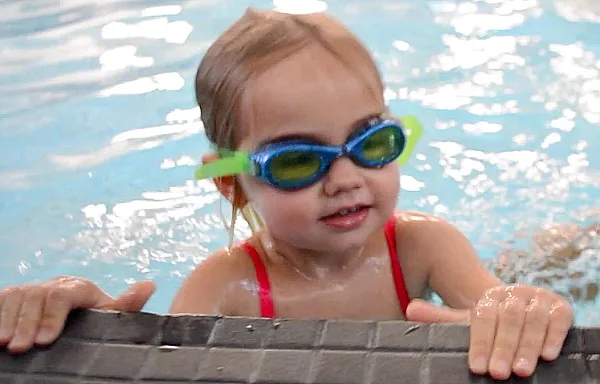
Always use both hands when monkey walking

Make your way to the deeper water by holding the gutter or edge of the pool with both hands, moving along one hand at a time. This is called monkey walking. She might want to go all the way to the deepest part, or only to shoulder- or neck-deep water — that's okay, start with whatever she's comfortable with. Each time, encourage her to go a little deeper, even just a few inches further along the wall. If she's not willing, don't force it.

Front float in deep water

Practice the front float in the shallow end first — relaxed, head in a neutral position, arms and legs floating naturally, for ten seconds or more. Then monkey walk toward the deep end to try it, stopping wherever she decides.

Have her hold the gutter, hold her breath, put her face in the water looking at the bottom, and not let go, for about five seconds or more. Ask if she was holding herself up or the water was holding her — she'll likely say the water. If she's ready to let go, make sure she drops her hands into the water (lifting them above the water makes her sink slightly). And remember, the front float doesn't have to be horizontal — if her legs dangle, let them dangle.

Back float and otter roll in deep water

Make sure she can back float in the shallow end completely independently for at least thirty seconds, and practice otter rolls. Convey to her that if she can back float in the shallow end, she can do it in the deep end.

Monkey walk toward the deep end and let her decide where to try it. When she's ready, have her hold the wall, place her belly button against it, put her head back, extend her arms, and not let go. Ask if she feels the water floating her. If she's ready to let go, remind her to drop her hands into the water. When she drifts away from the wall, have her perform an otter roll to get back.

Penguin float

A penguin float is floating vertically with a straight body, legs together, and arms at your sides like a soldier. Ask her what she thinks would happen in the deep end — she'll likely say "I'll sink!"

Demonstrate first: hold the edge with one hand, the other arm at your side, legs together. Hold your breath and let go, keeping your head neutral (looking straight ahead). You may be surprised how buoyant you are — some people end up just below the surface, others float higher. Now it's her turn (if she needs help, do this where you can stand but it's deep enough for her).

Why do a penguin float?

To illustrate, once again, just how buoyant we are (except for very muscular people, or those with very little body fat). It proves we won't drop like a rock to the bottom, even in a vertical position. And if your mouth and nose are just inches from getting air, it must take minimal effort to tread water — exactly right. This isn't a treading-water lesson, but it's a step toward it.

Balloon float

Once she has the penguin float, have her pretend to be a helium balloon. Hold your breath, get down to the bottom in the penguin position, then let yourself rise back up to the surface. (Holding your breath is key.) Now have her try it — it's fun, and she'll probably want to do it again and again.

Bobbing in deep water

Work her up to bobbing in about six or seven feet. Start in chest- or shoulder-deep water, making sure she has a good rhythm of blowing bubbles, then taking a breath, in control for at least fifteen bobs.

Every time she goes under, she should bend her knees and push off the bottom (like jumping on land), arms up when she goes down and down when she goes up. In water over her head, the arm action is more dramatic: starting with arms straight at her sides, sweep them up over her head while blowing bubbles to get down, then sweep them back down to her sides (like an eagle's wings) with the jumping action to get back up for a breath.

More on deep water

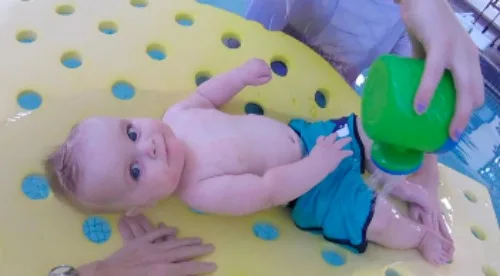
Be patient and let her go at her own pace. Other deep-water activities you can do alongside her: have her kick to the deep end with a kickboard, a swimming noodle, or my favorite, the Finis Floating Island — a large mat with holes, so they can see the bottom while lying on top. Many of my students still working on their fear of deep water surprisingly love these activities.

Want a head start? Get my free course — How to Prepare Your Baby for Swim Lessons (0–8 months).
← All articles
More from Tessa

Related articles

Small Business Ideas for Teachers
Are you looking for small business ideas for teachers? Why not start a private swim school? Here's how to get started!
3 Amazing Health Benefits Of Swimming In Toddlers That Will Blow Your Mind!
Everybody knows that sports have amazing health benefits for those who participate. Yet, we feel that people rarely speak of the amazing health benefits
Secrets to a More Family-Friendly Yard
Could your home's outdoor space use an upgrade? More families are spending time together these days, and a yard that's ready for various activities can be a joy.
Your Family's Guide to Swimming Pool Safety: Top Resources and Tips
Swimming is a perfect way for your family to have fun and stay cool in the late summer and into the early fall.
Teach Your Child to Respect the Water
How to Teach Your Child to Respect the Water. Independent play teaches them to respect the water. When children understand that water demands
Can Babies Swim Naturally? The Mammalian Diving Reflex
Can babies swim naturally? Short answer. No. You might think they can because most babies, not all, are born with a diving reflex commonly referred to as
How Do I Know If My Child Is Dry Drowning?
Dry drowning and secondary drowning, also called delayed drowning, are not accepted medical terms. Here are the facts every swim parent should know.
What Is the Best Age to Start Swimming Lessons?
What is the best age to start swimming lessons? The answer is four months of age. if you give your infant the opportunity to early water exposure, he's...
How Do I Make My Child More Comfortable in Water?
How do I make my child more comfortable in water? Whatever you do, don't force your child to do anything they don't want to do. Your child is more...
Baby Fear of Water: Does Your Baby Suddenly Have a Fear of Water?
A parent contacted me with this question: How do you help a baby/toddler overcome the fear of water? My son is now terrified when we have to rinse shampoo
How to Prepare Your Baby for Swimming Lessons Part 3
Teach your baby independence Just as you teach your baby to be independent on land, learning independence in the water is even more crucial. I don't mean
How to Prepare Your Baby for Swimming Lessons Part 2
Teach your baby to float on his back. Tips on how to get your baby comfortable with this life-saving skill.
How to Prepare Your Baby for Swimming Lessons
Conditioning your baby to hold their breath is the best way to prepare your baby for swimming lessons. They've recently emerged from a watery environment.
How I Stopped Swimmer's Ear Infections Once and for All
Are you or your children susceptible to swimmer's ear infections, like I am? If so, I have an excellent little home remedy for you.
Tips and Tricks to Motivate the Scared Child to Float
Easy games and activities to motivate a scared child to practice floating — turtle eggs, a bar float, a kickboard, and more.
How to Teach Assisted Floating: Watch This Video
Alexa is 3-years-old. She has mastered breath control. The next step in the learn to swim process is assisted floating. Here's how to introduce it.
Respect for Deep Water: No Child Is 100% Water Safe
David has had regular exposure to the water which has taught him respect for deep water. He has learned a lot about water safety and often is required...
What Is Breath Control in Swimming?
Breath Control. Remember Abram from about a month ago? Well, now he's one month shy of 4-years-old and has officially mastered breath control.
4 Must-Haves for Your Vacation Getaway: Taking a Trip over the Holidays?
Check out these 4 must-haves for your holiday adventures. A baby wetsuit is an excellent option for infants instead of a swimsuit or in addition to it.
Got a Child Afraid of Water on the Face?
Meet Abram. Four simple activities to get kids as young as 2 to put their face in the water — without goggles or a nose clip.
Finis Tempo Trainer: Not Just for Competitive Swimmers
The Finis Tempo Trainer is like a metronome for swimming. It's used to set a specific pace at which you want your student to kick or pull in the case of...
Shallow Water Blackout: What Every Parent Should Know
Have you heard of shallow water blackout? Every parent should know about the dangers of it and how to prevent it.
Swim Mirror: Best Teaching Tool for Swimmers of All Levels
The swim mirror, made of reinforced polished aluminum, is one of the best investments I've ever made for my swim school.

Have a question about swim lessons or water safety? I'd love to help.

Get in touch